Sigiriya or Pidurangala? Which rock to climb, and how to do both
Sigiriya has the frescoes and palace ruins, Pidurangala the view of Sigiriya at sunrise. Prices, times and a plan for both.
Updated: 18 October 2026, 7 min read
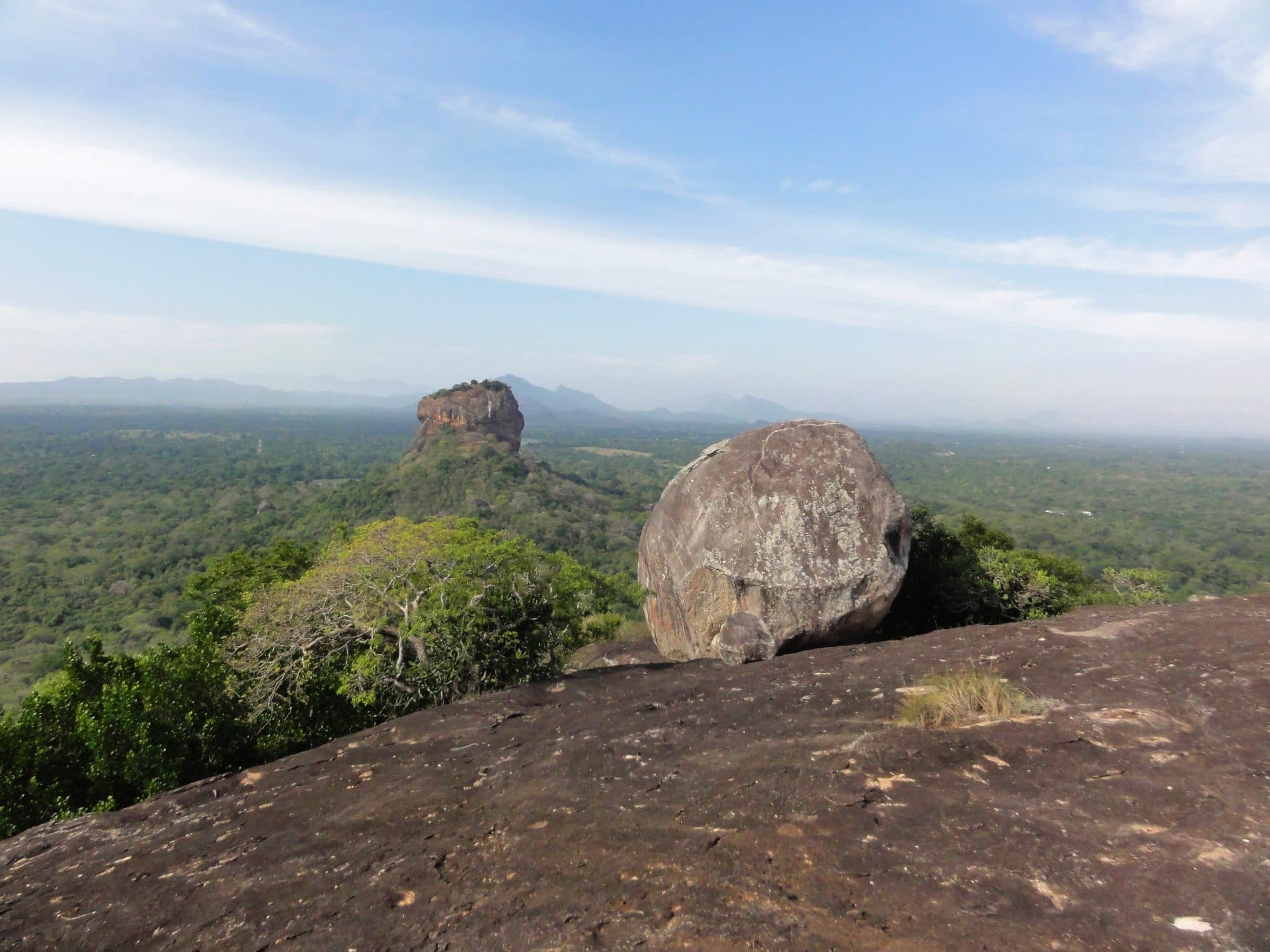
Climb Sigiriya if you want to see the UNESCO World Heritage Site itself: the ruins of a 5th-century royal palace on top of the rock, the painted frescoes, the Mirror Wall and the giant lion's paws. Climb Pidurangala, the rock about 1 km to the north, for the best view of Sigiriya, ideally at sunrise. Sigiriya costs US$35 for foreign adults and Pidurangala LKR 1,000 (about US$3), but Pidurangala ends with a rough scramble over boulders (checked October 2026). With one free morning and one free afternoon near Sigiriya, you can do both.
Sigiriya and Pidurangala compared
| Sigiriya (Lion Rock) | Pidurangala | |
|---|---|---|
| What it is | UNESCO World Heritage Site since 1982: a 5th-century royal palace | A Buddhist temple rock, about 1 km north of Sigiriya |
| Ticket for foreigners (checked October 2026) | US$35; children aged 6 to 12 US$20; charged in rupees | LKR 1,000 (about US$3), cash only |
| Opening hours | Officially 7 am; last tickets at 5 pm | Tickets from 5 am to about 6 pm |
| The climb | About 1,200 steps; the rock is about 180 m high; 1 to 1.5 hours up | Stone steps, then a boulder scramble; 30 to 45 minutes up |
| Hardest part | Steep metal stairways on the bare rock face | The last boulders, where you need your hands |
| Best time | 7 am, or from about 3 pm | Sunrise or sunset |
| What you see | Gardens, frescoes, Mirror Wall, lion's paws, palace ruins, museum | Reclining Buddha, 360° view with Sigiriya in front of you |
| Time needed | 2.5 to 3 hours | 1.5 to 2 hours |
What do you see on Sigiriya?
King Kashyapa built his palace on top of the rock in the late 5th century. One route leads from the bottom to the top:
- Water and boulder gardens, among the oldest landscaped gardens in the world.
- A spiral staircase to the frescoes, the famous painted women. No photos here.
- The Mirror Wall, once polished smooth, with verses scratched by visitors more than 1,000 years ago.
- The Lion's Gate, a terrace halfway up with two huge brick paws. From here metal stairways climb the rock face; think about this part if you are afraid of heights.
- The summit, with the foundations of the palace and a wide view. No shade, and no railing at the edges.
The ticket includes the Sigiriya Museum near the entrance. A licensed site guide brings the stories to life; we can arrange one on request.
What is the Pidurangala climb like?
You start at the Pidurangala temple at the foot of the rock, where you buy your ticket. Tradition says King Kashyapa moved the monks from Sigiriya to Pidurangala and rebuilt their temple. In the temple grounds, cover your shoulders and knees and walk barefoot; sarongs are lent at the ticket office.
Uneven stone steps lead up through the forest to a large reclining Buddha made of brick, about halfway up. Then the path turns into a scramble: you climb over boulders, use your hands and squeeze through a narrow gap, following painted arrows. At sunrise there is often a short queue at the last big rock.
The top is a wide, flat rock with no railings. Sigiriya stands in front of you to the south, and the sun rises on your left. If the scramble is too much, turn back at the reclining Buddha, but the full view is only at the top.
Sigiriya tickets: price and how to buy
- Sigiriya: US$35 for foreign adults, US$20 for children aged 6 to 12 (Central Cultural Fund, checked October 2026). The price is set in dollars but charged in rupees at the day's rate: LKR 11,760 in mid-October 2026. Citizens of SAARC countries pay less.
- Online: buy in advance on the official Central Cultural Fund site, eservices.ccf.gov.lk. An order is valid for 90 days, covers one entry on the day you go and cannot be refunded. You show your receipt at the counter to get the paper ticket. Online mainly saves queueing in high season.
- Pidurangala: LKR 1,000 per person, in cash, at the temple (checked October 2026).
When is the best time to climb?
- Sigiriya: be at the gate when it opens at 7 am. Tour groups arrive from about 8 to 9 am, and in high season the narrow stairs can have long queues until mid-afternoon. By late morning the rock is hot. The second-best slot is from about 3 pm; the last tickets are sold at 5 pm.
- Pidurangala: sunrise is the classic. Near Sigiriya the sun rises between about 5.50 am (May and June) and 6.25 am (January and February); start climbing 45 to 60 minutes before. Sunset, between about 5.45 and 6.30 pm, is quieter, but you walk down in the dark, so bring a head torch.
- Season: the area is in the dry zone and can be visited all year. October to December are usually the wettest months. Wet rock on Pidurangala is slippery; wait until it has dried.
We know of no lasting damage from Cyclone Ditwah (November 2025) at either rock. Both are open as normal (checked October 2026).
Are there wasps on Sigiriya?
Yes. Large wild wasp and hornet nests hang on Sigiriya's rock faces. Attacks are rare but do happen, usually when wind breaks off part of a nest. In August 2024, 22 foreign visitors needed hospital treatment and the site closed for a while. Walk quietly and follow the staff's instructions; the wire-mesh shelters on the rock are there for an attack. If you are allergic to stings, carry your medication and tell your driver. Drones need written permission from the Central Cultural Fund.
How to do both: a simple plan
With two mornings (best):
- Day 1: Pidurangala at sunrise. Your driver takes you to the temple in the dark and waits. Breakfast, a rest at the pool, and the Dambulla cave temple in the afternoon.
- Day 2: Sigiriya at 7 am, before the heat and the tour groups.
With one day: Pidurangala at sunrise, a quiet middle of the day, then Sigiriya from about 3 pm.
On our 10-day round trip you stay three nights near Sigiriya, enough time for both. On the 7-day highlights round trip, Sigiriya and Dambulla share one day; if your flight lands early, add Pidurangala at sunset on the arrival day.
Which rock for children and older travellers?
- Children: children who like climbing usually love Pidurangala, but the last boulders need an adult's hand. Younger children can stop at the reclining Buddha. On Sigiriya, hold small children's hands on the metal stairs.
- Older travellers or stiff knees: Sigiriya has many steps, but they are proper steps, with railings on the steep stairways, and you can rest on the way. Pidurangala's scramble is harder on knees and balance. If neither climb feels right, walk through Sigiriya's gardens and museum and enjoy the rock from below.
- Everyone: take water, a hat and shoes with grip. Flip-flops are a bad idea on either rock.
Nearby: the Dambulla cave temple
The cave temple of Dambulla is about 30 minutes by car from Sigiriya. Five caves hold more than 150 Buddha statues under painted ceilings, and the temple is still in use, so cover your shoulders and knees and take off your shoes. For Polonnaruwa, Anuradhapura and elephant safaris nearby, see Sigiriya and the Cultural Triangle and our 15 places in Sri Lanka worth the trip. Temple etiquette, cash and tipping are in our practical tips for Sri Lanka.
Want to see this yourself?
Tell us your dates and what you like. Ravindu or one of our team will send you a personal route and price, usually within 24 hours.
Private round trips from US$700 per person for 7 days
FAQ
How much is the Sigiriya ticket in 2026?
US$35 for foreign adults and US$20 for children aged 6 to 12, charged in rupees at the day's rate (checked October 2026). The ticket includes the Sigiriya Museum.
Is Pidurangala better than Sigiriya?
It depends on what you want. Pidurangala has the better view, because Sigiriya itself is in it, and it costs much less. Only Sigiriya has the palace ruins, the frescoes and the lion's paws.
Can you climb Sigiriya for sunrise?
Not officially: Sigiriya opens at 7 am, after sunrise. Some travellers report being let in earlier, but you can't rely on it. For sunrise, climb Pidurangala, where tickets are sold from 5 am.
What should I wear for Pidurangala?
Clothes that cover your shoulders and knees, because you walk through a temple at the start, and shoes with good grip for the scramble. You take your shoes off in the temple area.